 Crypto Radar Daily

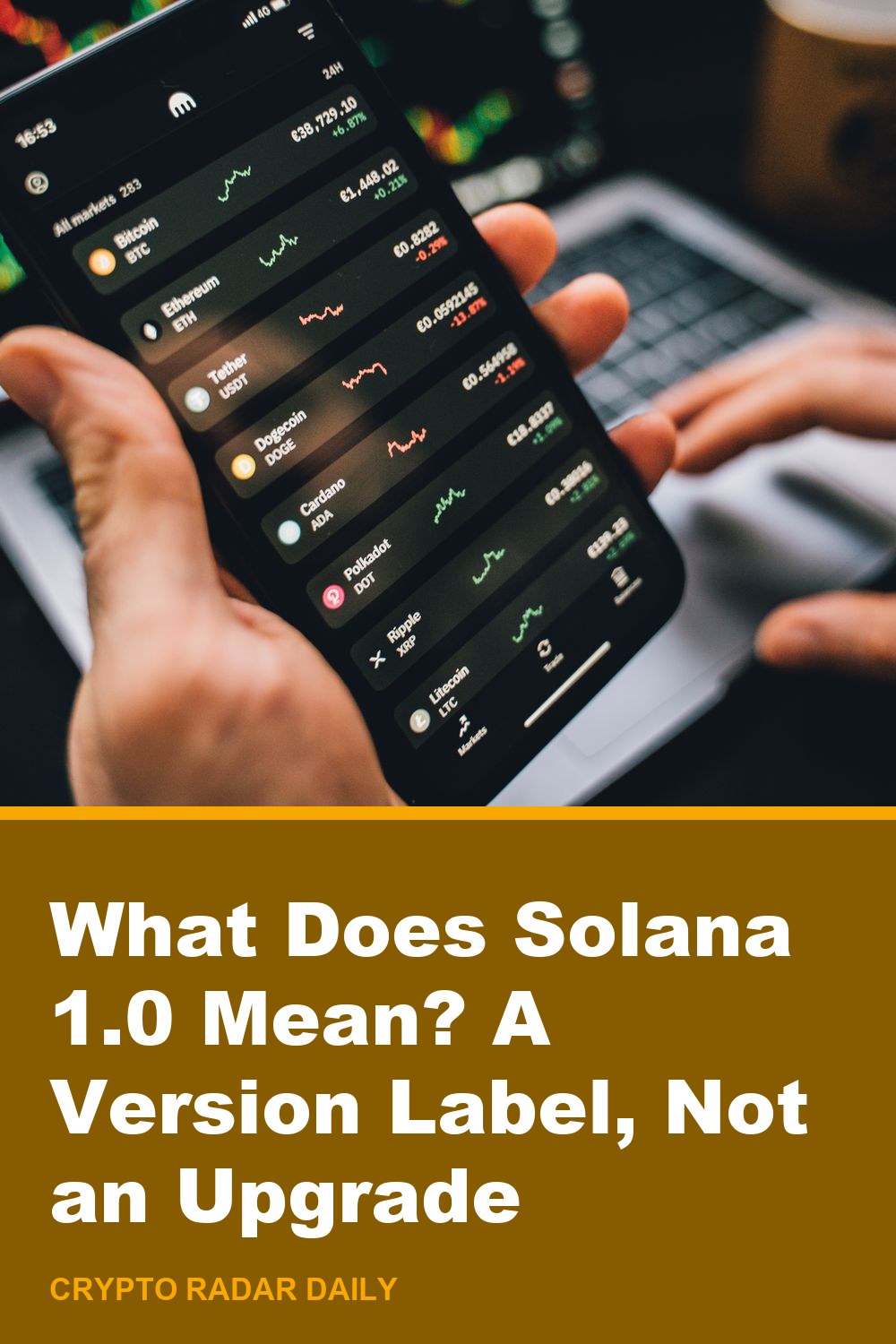

Solana 1.0 is a new name for the network's shared protocol version, not a new coin, a migration or an upgrade you have to install. The Solana Foundation retired the "mainnet beta" label the network had carried since launch, and your wallet, your SOL and your transaction history stay exactly as they were. That is worth knowing now because any big-sounding version number tends to attract scammers, and this one needs nothing from you.
The claim: "Solana 1.0 is a major update I have to act on"
Headlines about a "1.0" can sound like a software release, the kind where you update an app or move your funds. That is the myth. According to The Block, the foundation said in a statement on Monday that the change does not require any action from users. CoinDesk summed it up the same way: the blockchain is getting a shared version number, and wallets, transactions and apps remain unchanged.
So the fact is simple. Solana 1.0 is a naming simplification. It says nothing new about your balance, your keys or the apps you use.
What is confirmed about Solana 1.0
Here are the details reported by The Block, CoinDesk and Decrypt.
- The "beta" label is gone. The network had been labelled "mainnet beta" since it launched. CoinDesk puts that at more than six years, and Decrypt also says six years.
- 1.0 is a shared protocol version. The protocol is the set of rules every computer running the network follows. Decrypt describes the 1.0 designation as a common way for developers to track those rules.
- Validator software keeps its own numbers. Validators are the computers that process transactions and keep the network running. They use software called clients, such as Agave and Firedancer. The Block reports that each client keeps its own version number, so the protocol version and the software versions are now separate things.
- Your holdings are untouched. The foundation said SOL holdings, transaction histories and accounts are unaffected.
The foundation also gave a reason for the change. In its words, "Solana 1.0 recognizes the progress on network performance, resilience, and developer experience," and that progress "continues with this simplification of nomenclature."
Why the old label mattered less than it sounded
In everyday software, "beta" usually means "still being tested." It is natural to read "mainnet beta" that way and to read the removal as a stamp of approval. The foundation frames it as recognition of technical progress, but a label is a label. It is a way of naming things, and it does not change how the network behaves for you today.
The useful comparison is with a house number. Giving a street a clearer address system does not move your front door or change who holds the keys. Your keys still matter far more than the network's name. If you want a refresher on that, we explain what a seed phrase is and how it controls your crypto.
Why two kinds of version numbers now exist
This is the part that matters for the people who build and run Solana. Jump Crypto's Firedancer went live on Solana's mainnet in December 2025, giving operators an independently developed alternative to Agave. The two clients have separate codebases, release schedules and version numbers.
With two clients, "which version are you on?" got confusing. A shared protocol version gives both teams, validators and infrastructure operators a common way to identify changes to Solana, whichever client they run. That is the practical point of 1.0. It is bookkeeping for the people who maintain the network.
The foundation added one caution for developers and validator operators. Assigning a protocol version does not automatically switch on every related network improvement, so they should keep following the release guidance for their own software. This does not affect an ordinary holder, but it shows that "1.0" is not a single button that changes everything at once.
What is not known or not claimed
Some things were not said, and it helps to stay careful about them.
- It is not a guarantee. The announcement as reported covers naming. It does not promise that the network will never have problems, and it does not change the risks of holding any crypto asset.
- It is not a price signal. Nothing in the foundation's statement ties the label to value, and we will not guess at one.
- It does not describe future changes. What later protocol versions will contain has not been laid out in what has been reported, so treat claims about "what 1.0 unlocks" with suspicion.
The name change also arrives alongside other developments. The Block notes that Alpenglow, a consensus upgrade, was activated on mainnet in October, targeting transaction finality of about 150 milliseconds, down from 12.8 seconds. Finality is the point at which a transaction can no longer be reversed. That upgrade is separate from the 1.0 label, and an earlier mainnet change also raised the transaction size limit, which we covered in Solana's move to a 4,096-byte transaction limit. The Block also lists business news on the network, including plans from the Depository Trust & Clearing Corporation to connect its tokenization service in the second half of 2027. Those are separate stories, and none of them requires anything from you either.
What to do (and what not to do) after the Solana 1.0 news
For most holders, the answer is to do nothing. A short checklist keeps you safe if you hear more noise about this.
- Leave your funds where they are. No migration, swap or "upgrade your tokens" step is part of this announcement. Anyone telling you otherwise is contradicting the foundation's own statement.
- Never type your seed phrase into a website or message because of "Solana 1.0." A real version-number change never needs it. Your recovery words open your whole wallet, as we explain in our guide to what a private key is and what it signs.
- Distrust urgency. Messages with a deadline, such as "claim your 1.0 airdrop" or "verify your wallet before the switch," are the standard shape of a scam. Close them and go to the official Solana Foundation channels or your wallet's own website, typed in by hand.
- Keep routine updates routine. Update your wallet app only through its official app store or website, as you normally would. That is ordinary hygiene, not a response to this news.
- If you run a validator or build apps, follow the release notes for your client. The foundation's advice is to check which releases support each protocol rollout.
FAQ
Does dropping "beta" mean Solana will no longer have bugs or outages?
No such promise was made. The foundation described the change as recognising progress and simplifying names. Any blockchain can still have software faults, so keep sensible habits, such as protecting your recovery phrase and not leaving more on one platform than you can accept risking.
Is Solana 1.0 a new token or a fork I might receive coins from?
Nothing reported describes a new token, a split or a distribution. The foundation says SOL holdings and accounts are unaffected. Treat any message offering free coins tied to "1.0" as a likely scam.
If you are shopping on Amazon anyway, you can start from here: visit my Amazon storefront (Amazon Italy).
As an Amazon Associate I earn from qualifying purchases, at no extra cost to you.
Watch or listen to this episode
Sources
- The Block: Solana drops ‘mainnet beta’ label and adopts protocol version 1.0
- Decrypt: Solana Drops 'Mainnet Beta' After Six Years: Here's What 1.0 Is All About
- CoinDesk: Solana drops ‘beta’ label after more than six years
Photo: Alesia Kozik / Pexels

I'm an Italian creator who builds apps, games and websites. I run Crypto Radar Daily with the help of AI tools: every article starts from the sources linked above, and I check what goes out. I'm not a doctor, a lawyer or a financial adviser. Spotted a mistake or have an idea? Write to me.
Instagram @spartaco_94_My websiteWrite to meAbout this blog







 Green Investing 101: A Beginner's Guide to Sustainable Investments
 Negotiation: The 3-Book Bundle